Français
 English

What is the purpose of knowing how to read the time?
Time is everywhere: on our smartphones, televisions, and digital displays. But beyond just the numbers, what is the real purpose of learning to tell time for a child?
Discover how this skill becomes a powerful tool for independence—helping to structure the day, reduce the stress of transitions, and allow little ones to better understand the flow of time.
Knowing how to tell time is incredibly useful for a multitude of reasons. It ensures you don't miss your afternoon snack, lets you count down the seconds or minutes until the end of school, or helps you be on time for your best friend's birthday party.
Telling time helps people find their bearings, allowing them to synchronize with others almost instinctively. It is essential in our society, as it enables us to live and work together. In a way, hours are like page numbers in a book or chapter titles: they help us navigate through the day. Each block of time is associated with specific tasks that are common to most people.
Learning to tell time allows children to find their place in the day and clearly identify daily tasks and rituals that need to be accomplished at the right time.
Summary: Why teach your child to tell time?
- Independence: They no longer need to ask you "When is it?".
- Emotional Security: Visualizing the end of the day reduces anxiety.
- Structure: Facilitates transitions (bath, meals, bedtime) without conflict.
- Reference Points: Understanding the difference between short time (minutes) and long time (hours).
Summary: Which tool to choose based on your child's development?
| Child's Age | Key Concept to Master | Recommended Tool |
|---|---|---|
| 3 - 8 years | Morning / Evening / Day / Night concepts | 24h Clock & Stickettes |
| 4 - 8 years | Days of the Week and Seasons | Time Linear & Weekly Planner |
| 6 - 10 years (Primary School) | Hours & Minutes (Analog time) | Educational 12h Clock |
Note: Every child develops at their own pace. These guidelines help in choosing the tool best suited to their current curiosity.
Which tools to use based on your child's age?
For ages 3-8: Mastering the concept of TIME
Before reading the clock, children must understand the concept of time. This is the essential building block: you cannot start teaching a child to read hours if they haven't first learned how to navigate their day and their week.
The goals at this age: Mastering the meaning of terms like morning, noon, afternoon, and evening, as well as day and night, and the names of the days, months, and seasons.
Our recommended tools for understanding the concept of TIME:
- The perpetual calendar (DIY) for time nomenclature.
- Our 24-hour routine and weekly clocks in the My Little Clocks section.
With our educational clocks and their specialized icons (our famous Stickettes), you can set your child's daily routines. Children will naturally make the connection between time slots and their activities. For example, when evening comes, they will know instinctively that this period is associated with putting on pajamas, brushing teeth, and going to bed.
A little bonus: These tools lay the foundation for analog clocks because the child already understands the role of the rotating hand that points to a specific piece of information.
For older children (Ages 6-10): Learning to read the clock
Once the concept of time is well-mastered, transitioning to reading the clock becomes much easier. Around age 6, you can choose between an analog clock (with hands) or a digital clock.
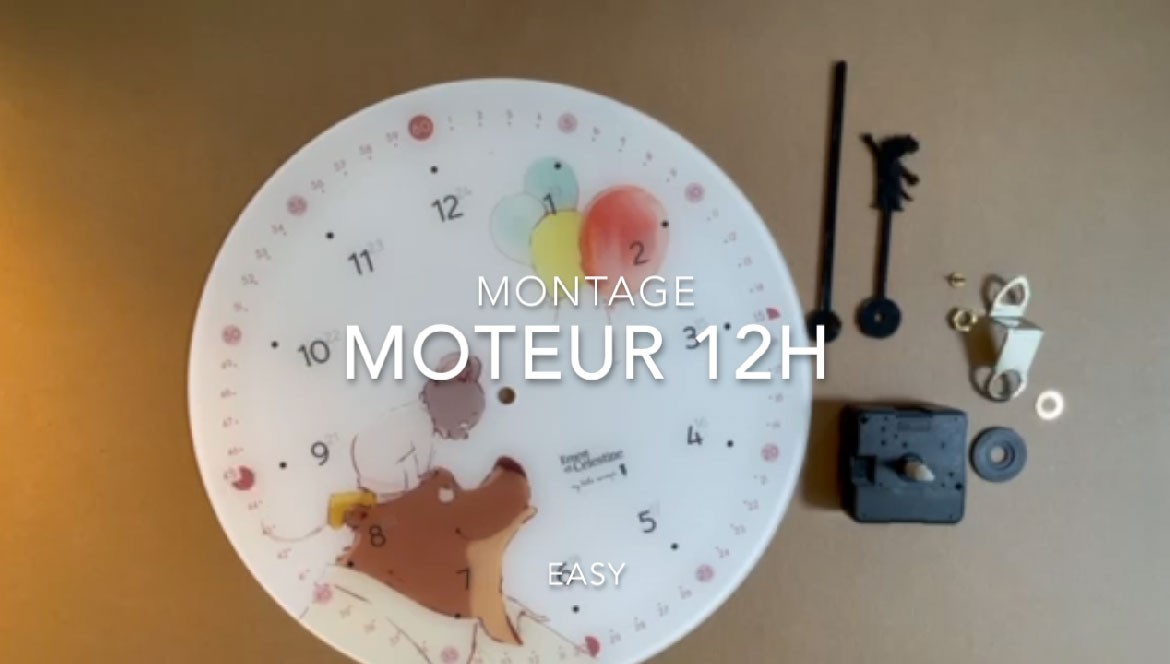
Using clocks with hands is particularly effective for helping children understand fundamental principles. It provides a clear visual representation of the difference between hours, minutes, and seconds. Decoding time this way is both fun and mentally rewarding.
Find our dedicated models in the My Little 12h section.
★ Did you know?
Time is not perceived the same way by an adult and a child. For them, "5 minutes" can feel like an eternity when waiting for a snack, or pass in a single second when they are playing.
It is therefore essential to provide them with clear time visualization tools that will help them master the concept of duration. By "seeing" time go by and feeling how long a task takes, they will learn to overcome frustration and understand the nuance between "perceived" time and "real" time.
To go further:
Check out our other blog tips, including our comprehensive guide: Learning to tell time: when and how?
Educational video from 1 jour 1 actu (in French): Watch the original video
"Learning to tell time is an exciting journey for a child. With a little patience and the right visual tools, what once seemed like a mystery quickly becomes child's play and a source of great pride for them (and for you!)."